
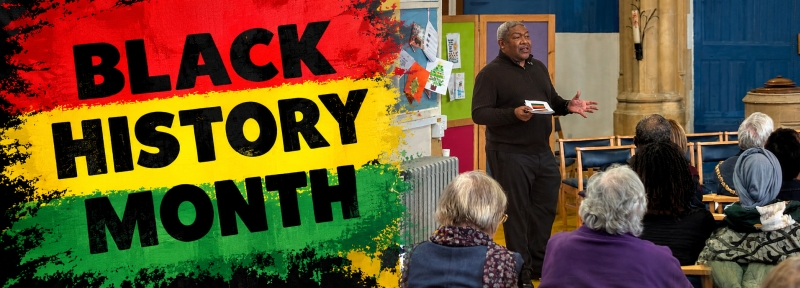
The Wantage and Abingdon Circuit marked Black History Month with a celebration at Trinity Church, Abingdon, bringing together talks, storytelling, music, and conversation. About 80 visitors attended from across the circuit and beyond.
The programme opened with an address by Mr Bevan Powell MBE, who explored both the origins and the continuing significance of Black History Month. He began by noting that ‘there is so much division in this world’, and stressed the need for Britain to become a place where ‘every voice is heard’. Drawing on Genesis 1:27: ‘we are all made in the image of God’, he reminded people that although the Christian faith affirms the equal dignity of all people, ‘not every story is told’, and ‘not every achievement is recognised’. Black History Month, he said, exists to correct this imbalance and to ensure that contributions long overlooked are brought into the light.
Mr Powell traced the movement back to Dr Carter G. Woodson, the pioneering African American historian who believed that ‘a people without a history are treated as a negligible factor in the thought of the world’. In 1915 Woodson founded the Association for the Study of African American Life and History , creating a platform for research, education, and celebration of Black achievement. The movement grew steadily: the civil rights era of the 1960s gave it new momentum, and in 1976 Black History Month was officially recognised across the United States. It reached Britain in 1987, where it has since become an annual opportunity to honour Black heritage, culture, and leadership.
Turning to Methodism, Mr Powell highlighted Black pioneers in British and Caribbean Methodist life, including John Hodge, Ivan Weekes, George Pottinger, and Inderjit Bhogal. Their ministries, he said, helped shape the church’s commitment to justice, hospitality, and inclusion.
He also spoke about Racial Justice Sunday, explaining its origins and purpose. The Methodist Church established Racial Justice Sunday in 1995, following the racist murder of Stephen Lawrence in 1993. The Lawrence family were members of Trinity Methodist Church, Plumstead, and the tragedy compelled Methodists to confront the deadly reality of racism in Britain. Racial Justice Sunday has since become an annual observance across British and Irish churches, encouraging congregations to reflect, pray, and act for racial justice.
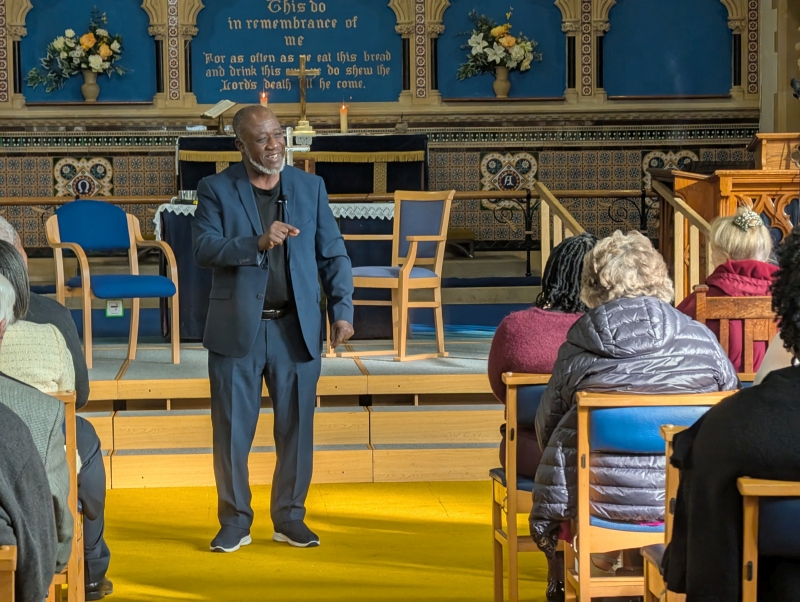
The programme continued with absorbing storytelling from Mr Joseph Kingsley Nyinah, delivered entirely without notes.
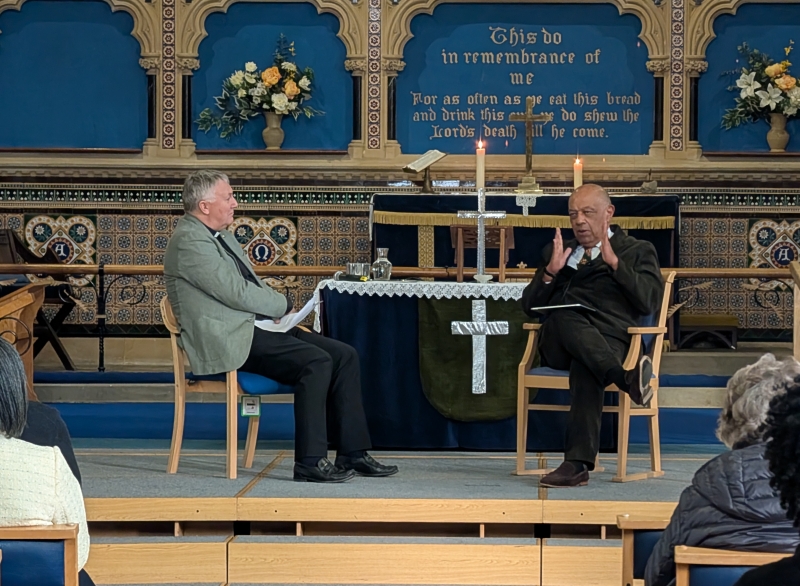
A conversation followed with The Rt Hon Lord Boateng, remembered by many as Paul Boateng, Britain’s first Black Cabinet minister. He spoke about the role of faith in his life, his training and practice as a lawyer, and the sense of calling that eventually drew him into politics as a means of making a difference.
Lord Boateng emphasised that ‘no political party has a monopoly on advancing racial justice’. As an example, he pointed to the repeal in 1981 of the so‑called ‘sus’ law: a provision of the Vagrancy Act 1824 that allowed police to arrest people suspected of intending to commit an offence. The law was used disproportionately against Black men and contributed to tensions between Black communities and the police. Its repeal under Margaret Thatcher’s Conservative government followed a campaign involving Black community activists and politicians from across the political spectrum, including Lord Boateng himself.
He went on to argue that political campaigning is just as important as what politicians do once in office in bringing about positive change. Reflecting on today’s political climate, in which many people feel disenchanted or disconnected from politics, he encouraged Christians to continue campaigning for their core values: peace, justice, and care for creation.
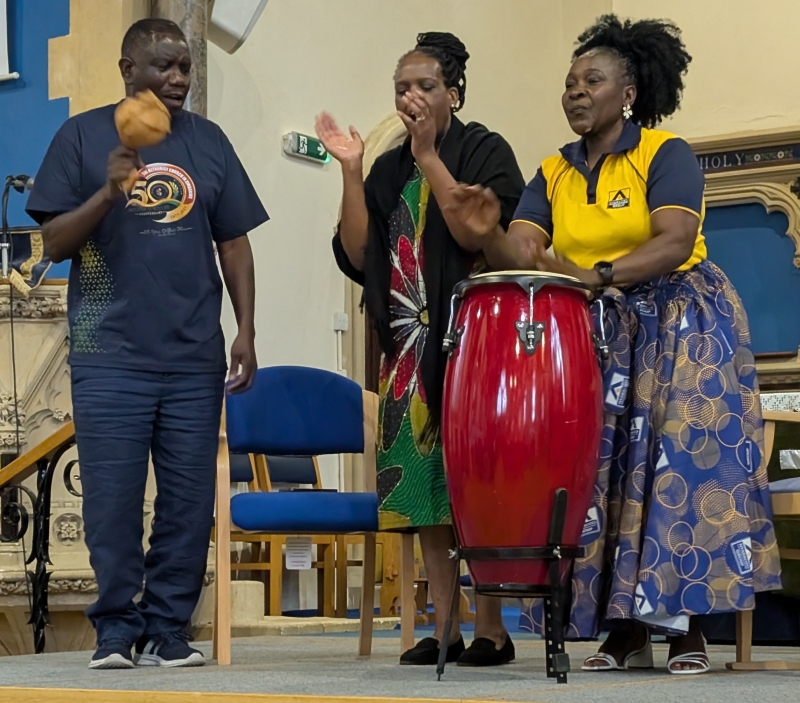
Music was provided by three members of the Methodist Zimbabwe Fellowship Choir, whose performance was very lively.
The event was introduced by Revd Georgina Bondzi‑Simpson, minister of Trinity and All Saints, and ended with a short service led by Revd Sonia Hicks, chair of the Northampton Methodist District.
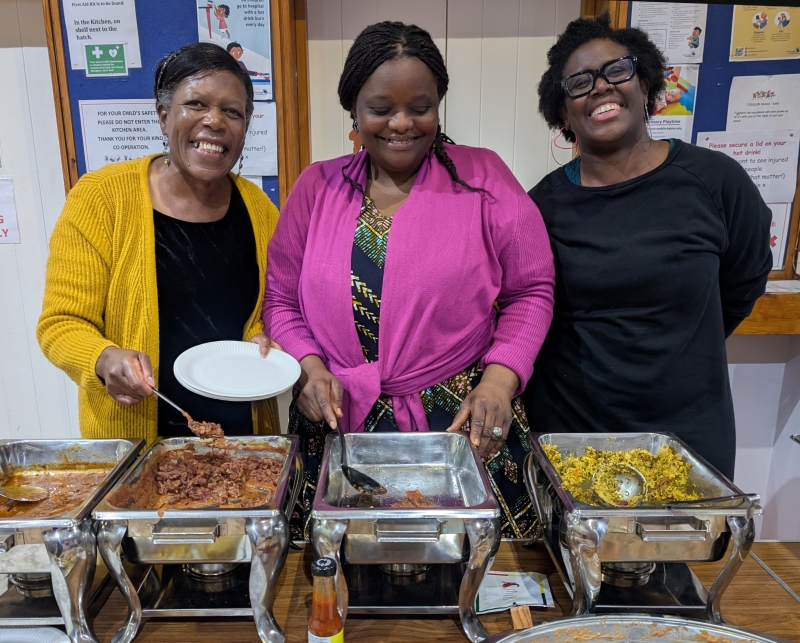
After the formal programme, many attendees moved through to the church hall to enjoy a generous spread of African and Caribbean food, including jerk chicken, fried plantain, salt‑fish fritters, sea bass in coconut cream, and much more. Numerous people contributed dishes, and the Trinity catering team managed the impressive task of keeping everything hot and well presented using chafing dishes.
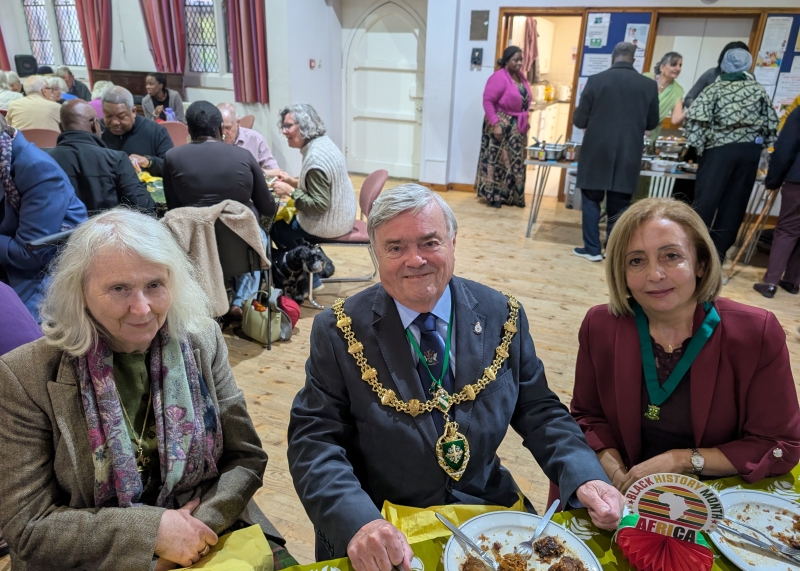
Guests included the Mayor of Abingdon, Cllr Andrew Skinner, and his wife, along with Cllr Rawda Jehanli, last year’s Mayor.
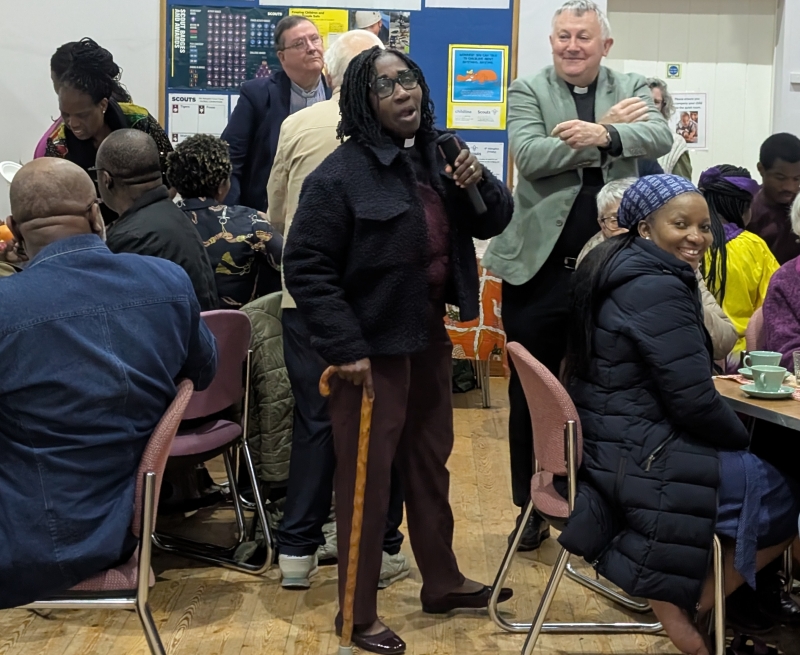
A lot of the work to put the event together was thanks to Revd Georgina Bondzi‑Simpson and the Circuit Administrator, Jane Hawes.